
Strong Japan: The Takaichi Persona
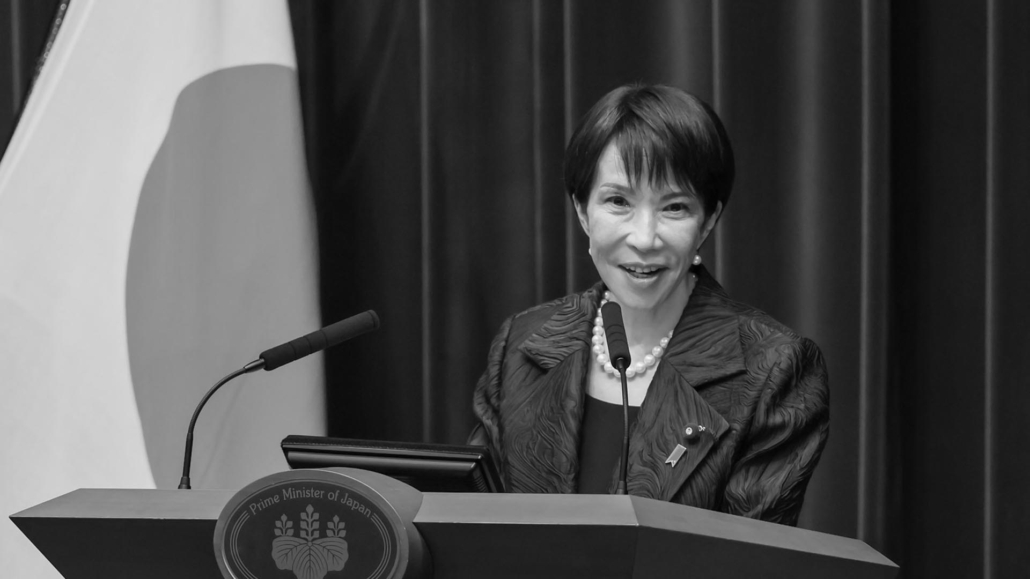
In early 2026, the victory of Sanae Takaichi in the lower house snap election marked more than just a political win. It signaled a renewed vigor in the brand of Japan’s national government.
The Persona of Strength
What distinguishes Takaichi from her predecessors is her branding around the concept of strength. While past Prime Ministers often relied on vague, bureaucratic language, Takaichi uses active and declarative Japanese. Her official campaign slogan, “Make the Japanese archipelago strong and prosperous,” served as a direct and clear mission statement that set the tone for her administration.
Equally impactful was her 2025 LDP leadership acceptance speech, where she pledged to “work, work, work, work, and work” (hataraite mairimasu). This catchphrase won the 2025 Japan Buzzword of the Year Grand Prize, signaling a leader with visible dedication to the people she serves. This rhythmic communication hammers home relentless effort that distinguishes her in a field of historically cautious leaders. Her physical presence is equally strategic, defined by a steady pitch and direct eye contact. She presents herself as a decision-maker, not a tentative consensus-builder.
Public Perception: The “Relatable” Leader Youth Can Trust
This persona has found a surprising stronghold among Japan’s younger generation, who perceive her differently than the traditional political establishment. A major reason for this positive perception is her clear and consistent communication style. Her policies are specific, her stance toward other countries is unwavering, and she does not contradict her beliefs in her actions. This decisiveness provides a sense of security in an era of global uncertainty.
This approach offers a valuable lesson for political campaigning and branding. To succeed in a competitive political landscape, a leader must be recognizable and relatable. By maintaining a clear stance that bypasses traditional media filters through direct social media engagement, Takaichi has created a sense of transparency that younger voters find refreshing.
This is reflected in the data: her support rate among those aged 18-29 has reached as high as 92.4%. This overwhelming popularity has sparked the “Sana-mania” (Sana-katsu) phenomenon, where her personal style has become a cultural icon. For instance, the specific handbag she uses reportedly sold out with a 9-month waitlist, and the type of pen she used during her appointment press conference saw a fourfold increase in sales, selling out in stationery stores across Japan. These tangible signals of her cultural reach demonstrate her popularity beyond policy as a persona that resonates with young people.
Strategic Persona on the World Stage
Takaichi’s persona is a vital tool in her diplomacy. During her summit in Washington in March 2026, she demonstrated that her brand is meant for international consumption just as much as domestic. Shaking hands with the U.S. President under the banner of “Stronger Together, Wealthier Together,” she signaled a new era of proactive Japanese engagement.
She uses her persona to signal that Japan is no longer a quiet partner. By moving away from rigid protocol and taking a more personal, proactive approach, such as addressing leaders by their first names and engaging in direct, skilled negotiation, she builds high-level trust quickly. Public opinion polls following the summit showed that over 65% of the Japanese public viewed her diplomatic performance positively. A major factor was her ability to maintain a strong alliance with President Trump, who publicly praised her as a “strong and wise leader”, while successfully keeping Japanese forces out of the US-Iran war. In the world of deal-maker diplomacy, she has proven that a strong personal brand can be just as effective as a formal security pact.
Prime Minister Takaichi is actively rebranding the country’s future. The image of vigor and strength that she communicates through both her rhetoric and her presence as a leader inspires confidence and hope at home as well as on the global stage. Her clear messages are a breath of fresh air for a public accustomed to circuitous and vague rhetoric from their leaders. Takaichi has skillfully parlayed her popularity into a consolidated government and a Diet session that is moving at her pace, despite some budget delays. Whether the momentum holds through a turbulent 2026 remains to be seen. However, she has already achieved something none of her predecessors managed: making the world pay attention to Japan’s leader, and not just Japan’s economy.
Conclusion: Three Lessons for the Future of Public Diplomacy
Takaichi’s rise is not just a case study in domestic political branding — it is a masterclass in how a nation-state can project power through a single, carefully constructed human persona. Three conclusions stand out for practitioners of public diplomacy.
1. The leader is the message.
In an era of short attention spans, the institutional channels of public diplomacy — cultural exchanges, official statements, embassy programming — are no longer sufficient on their own. Takaichi demonstrates that a head of government who commands genuine emotional loyalty at home generates gravitational pull abroad. Her 92.4% youth approval rating is not merely a statistic. It grants foreign policy leverage. Nations that invest in cultivating a leader’s authentic personal brand will find that it travels further than conventional public diplomacy.
2. Persona is the new treaty.
The traditional architecture of alliance-building relies on formal instruments, such as security pacts, trade agreements, multilateral frameworks. Takaichi’s Washington summit suggests that a credible personal relationship, built on consistent messaging, demonstrated competence, and the projection of strength, can achieve outcomes that formal diplomacy cannot offer on its own. Her ability to maintain a productive alliance with the United States while keeping Japan out of a regional conflict is a diplomatic result that no treaty clause could have engineered. Personal trust at the leader level has proven to be more powerful than institutional diplomacy.
3. Soft power needs to be backed by sharp persona.
Joseph Nye’s concept of soft power, the slow accumulation of cultural attractiveness, is no longer enough on its own. Staying relevant now requires something faster and more intentional: the weaponized personal brand. Takaichi deploys her identity with the precision of a strategic communications campaign. For middle powers competing for relevance in a world of short attention spans, the lesson is clear: a strong leader’s narrative controls the conversation. Countries that don’t invest in this dimension of statecraft will find themselves perpetually losing share of voice to those who do.
For practitioners of PR and strategic communications, the parallel is direct: conventional brand-building is no longer enough. CEOs must harness the power of public persona, and companies need narratives that move at the speed of the news cycle. In a hypercompetitive, fast-changing global environment, standing still is not a safe position.

