
The Kyoto You’re Looking For Was Never Real
What “tourist trap” really means, and why it’s a PR problem.
A tourist trap is a place people believe other tourists ruined.
So why does everyone visiting Japan go to the same ten places?
Japan welcomed a record 42.7 million international visitors in 2025, the first time the country had ever crossed 40 million, up roughly 16% on the previous record set in 2024 and about 10 million higher than the pre-pandemic peak. Visitors spent ¥9.5 trillion. The government’s stated target for inbound tourism is 60 million by 2030.
Kyoto. Population: 1.4 million. In 2024 it drew 10.88 million foreign visitors. On a busy day, that is roughly 150,000 people, most of them funneled into the same few districts. On a peak day, more than 1 in 10 people in Kyoto is a tourist.
In a Yomiuri Shimbun survey, around 90% of Kyoto residents said tourism congestion was degrading daily life. In the Higashiyama district of Kyoto, foreign visitor numbers rose 66% in a single year while Japanese visitors fell 12%.
I traveled all over Kyoto during the pandemic, when the crowds were gone. The “real” Kyoto, with quiet streets, temples where you could hear the monks pray, and top-shelf dining, is sublime. That Kyoto still exists… somewhere. But “real” comes with quotation marks because the fantasy does not align with the reality.
Somewhere inside those numbers is the exact moment a beloved place tips into “tourist trap.”
A tourist trap is usually a successful business, but with a big PR problem.
What people mean when they say “tourist trap” is that the place no longer feels personal to them. The emotional ownership disappears once too many other people arrive and the feeling of exclusivity is removed. Crowds ruin the fantasy of discovery, because people want to feel they found something.
When locals endorse a place, by coming back, bringing friends, working it into their plans, that’s authenticity. When tourists do the same thing, too often, the same place becomes “fake,” “commercialized,” “not worth it anymore.” Nothing about the place changed. The crowd just changed faces.
Modern travelers contradict themselves constantly. They dream of iconic destinations while also wanting experiences that feel hidden and untouched. Yet most follow the exact itinerary every content creator has already posted: Shibuya Crossing, Sensoji in Asakusa, teamLab, Shimokitazawa. Most of those places became famous because earlier visitors genuinely loved them, long before that emotional experience was omnipresent online.
People love discovery. They also love exclusivity. They want their travel experiences to be authentic, finding “hidden gems” and going “off the beaten path.” The “authentic” side of Japan has been eluding travelers since before the tourism boom, which raises the question: what if authenticity never existed in the first place?
The Fantasy Problem
Tourist traps are about the gap between reality and the expectations people have about a place and the idealized experience that they anticipate as they plan and fantasize about their travel.
Most travelers expect famous destinations to be crowded. What they do not expect is for reality to feel ordinary next to the fantasy they built in their heads: the exhaustion, the humidity, the long train transfers, the expensive food.
The destination did not lie to them. They arrived expecting a movie and found a functioning city full of actual humans.
Cities are not museums frozen in time for visitors to emotionally consume. They are living systems. People have jobs, routines, traffic, and lives entirely unrelated to tourism. Travelers unconsciously expect a destination to pause and perform for them anyway.
Travel today is less about experiencing places and more about chasing the emotional expectations attached to them. Along with the purchase of flights, hotels, train tickets and restaurant reservations, people are buying imagined versions of themselves. That is why disappointment hits so hard when reality feels less cinematic than promised. Tourism marketing rarely promises reality. It sells a feeling: escape, reinvention, transformation and often glosses over the mundane and irritating parts of travel.
Tourism Has Always Been a Performance
Tourism was never organic to begin with.
Since the advent of modern travel, cities have curated themselves for outsiders. Cultures have preserved, commercialized, and performed parts of their identity: for survival, for pride, for economic opportunity. What tourists call “authentic” is usually just whichever version of a culture survived long enough to become recognizable and easy to consume. Culture is not static. It changes continuously through economics, globalization, media, and tourism itself.
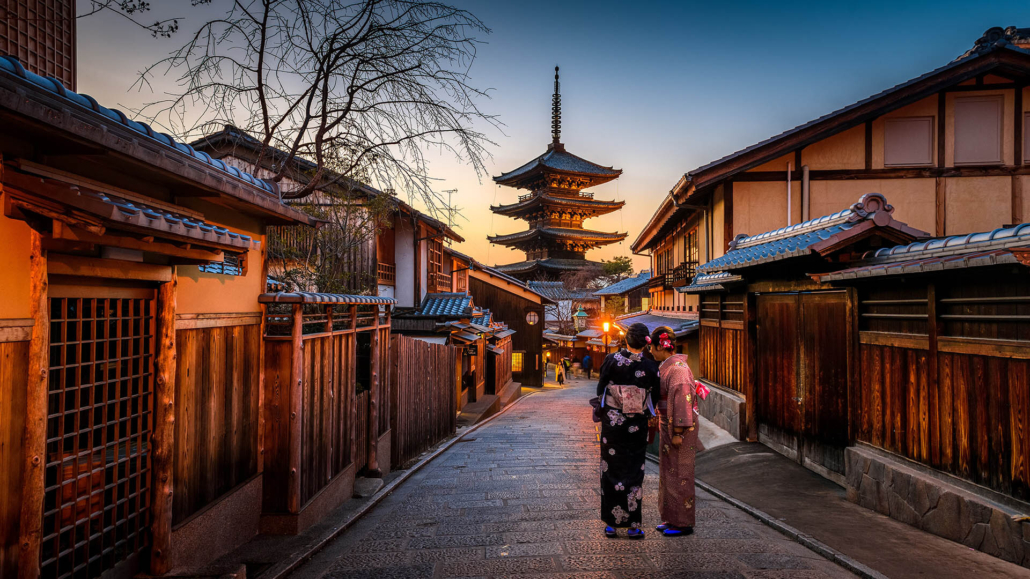
Kyoto is the clearest example. People imagine a city frozen in time: untouched temples, quiet streets, preserved history everywhere, but Kyoto is also carefully maintained, branded, and economically structured around tourism. Its “timelessness” is, in part, policy. To protect the historic landscape, or keikan, the city’s ordinances strip chains like Lawson and 7-Eleven of their usual mass-market brand colors and force the signage into muted browns that blend into the streetscape, while strict height limits keep the skyline low.
But even the “traditional atmosphere” isn’t untouched. Many of Kyoto’s “old” buildings are constantly renovated, rebuilt, or torn down and replaced with new construction behind a traditional facade. Designation protects the famous landmarks, but the ordinary streetscape that reads as “historic” is mostly remixed: old in spirit, new in material. Some of it crosses into outright butchery.
While it is easier to legislate signage colors and building height, it is much harder to control the size and makeup of the crowd that comes to visit.
Arashiyama’s bamboo grove during cherry blossom season is like waiting in line at Tokyo Disneyland, with bamboo instead of murals of Winnie the Pooh.
The crowd reshapes the scene and strips out the tranquil, reflective mood that made the place iconic.
None of that makes Kyoto fake. A shrine gift shop can fund genuine preservation. A tea ceremony performed for visitors can still carry real cultural meaning. Commercialization and sincerity are not opposites. Something can be curated, profitable, and emotionally real to the people inside it, all at once. Historical preservation is itself a form of public relations: cities decide which parts of their culture to highlight and protect, because those choices shape how the world sees them.
When you are surrounded by other tourists and the experience promised to you in travel writing doesn’t live up to the crowded reality, the performative nature of tourism becomes all the more apparent.
How To Address The PR Problem
This is where public relations becomes impossible to ignore.
Tourism, today, runs almost entirely on perception management. Countries, cities, and brands continuously shape a narrative about what kind of emotional experience a visitor should expect. People travel to a place because an image was successfully sold to them first. The destination already lives in their imagination before they ever land. Through photos, videos, and stories, they already have visualized themselves being there and that comes with expectations.
Japan is one of the most successful destination brands on earth. Clean cities, politeness, tradition, efficiency, nostalgia, anime, minimalism: that bundle is reinforced relentlessly through media, influencers, advertising, and everyday online discourse. People come to visit and tell their friends and neighbors about their experiences. The actual experience matters, but often perception matters even more.
Two forces, speed and the authenticity trap, have made this harder to manage.
Speed: Places no longer gain popularity gradually, instead they explode overnight. Discovery used to feel like an adventure; now the algorithm decides what you find. Virality compresses the entire tourism lifecycle. A destination can move from “hidden gem” to “overcrowded” to “overrated” within a single season. The tourism industry knows this and tries to capitalize on virality and create memorable scenes. Cafés, hotels, and whole neighborhoods now design themselves to be photogenic. This image curation helps to drive business. Visibility is free marketing.
The authenticity trap: The moment a place becomes too recognizable, audiences start calling it inauthentic. And ironically, “tourist trap” usually means people cared enough to talk about it at all. Credibility is what survives virality.
In sixteen years advising foreign brands and destinations in this market, that is the shift I have watched reshape the work. A decade ago, a tourism client wanted reach. Now reach is the easy part. A strong campaign or a single viral post delivers it almost too well. The hard part is what happens next: managing the backlash, the “overrated” discourse, the resident complaints that turn into international headlines. When public perception flips, a destination can go from “must-visit” to “avoid” faster than any marketing budget can respond.
Three Ways to Stay Out of The Trap
The “tourist trap” label is a reputation outcome, which means it can be managed. Three principles do most of the work.
- Sell the actual place, inconveniences included. Disappointment is the gap between the cinematic promise and the ordinary reality. Marketing that sells only atmosphere and escape sets travelers up to feel cheated by the humidity, the queues, and the train transfers. Destinations that age well market their real texture, including the inconvenient parts, so that arrival confirms the story instead of puncturing it. Honest expectation-setting is the cheapest reputation insurance available.
- Manage the crowd, not just the postcard. It is much harder to legislate crowd size and density. Density is exactly what destroys the feeling people travelled for. In Japan, roughly 73% of overnight stays are concentrated in just five prefectures: Tokyo, Osaka, Kyoto, Hokkaido, and Fukuoka. The answer is active flow management: promoting shoulder seasons, surfacing lesser-known districts, timed entry, and genuine regional dispersal. Protecting the experience matters as much as protecting the scenery.
- Treat virality as a moment, not a conclusion. A viral moment delivers reach almost too easily. The harder and longer task is the aftermath, when “overrated” discourse and resident frustration begin to compound. Destinations that hold their reputation monitor sentiment continuously, bring residents into the story rather than leaving them to vent to journalists, and address the backlash narrative before it sets in. Reach is a campaign. Credibility is a standing commitment.
What People are Actually Looking For
The idea that travel was once pure, untouched, and genuinely authentic is mostly unfounded nostalgia. Destinations have been built on expectation, performance, branding, and storytelling for a long time. Social media did not invent any of that, it just accelerated it.
What once took decades of destination branding now takes an iPhone, selfie stick, and some chutzpah.
A crowded destination can still be meaningful. A famous shrine can still feel spiritual. A touristy street can still hold a real memory. Calling something a tourist trap usually says more about the visitor’s disappointment than about the destination, because when people travel, they are searching for a feeling.
The genuine misconception in travel today is that authenticity was ever something anyone could objectively measure. Which is precisely why perception, narrative, and reputation are at the very core of the tourism business. As businesses seek to attract and keep a steady but manageable stream of tourists through their doors, it is essential to manage the distance between what a place promises and what it delivers. By actively managing reputation and curating places for good experiences, businesses can protect and maintain themselves. Rather than mourn the loss of some sort of evanescent “authenticity,” curating what you have protects and strengthens.
So maybe the neverending search for authenticity was never about whether a place escaped tourism. Maybe it is simply about the ability to feel something real.
For foreign companies entering Japan, getting communications right from the outset can significantly impact how quickly you gain traction in the market.
If you are evaluating your PR approach in Japan, working with a PR firm that understands both global strategy and local expectations can make a meaningful difference.
Responsible for PR in Japan and want results? Let’s talk!
Parthenon Japan’s team of bilingual communications strategists helps global teams translate strategy into measurable performance.
About the Author

Parker J. Allen is President & CEO at Parthenon Japan.
As a communications and strategy leader, he has served brands including Agoda, Air Canada, Olympus, Red Bull, Swiss Re, and Stryker among other global brands.

