
Branding That Evolves: The Pokémon Playbook
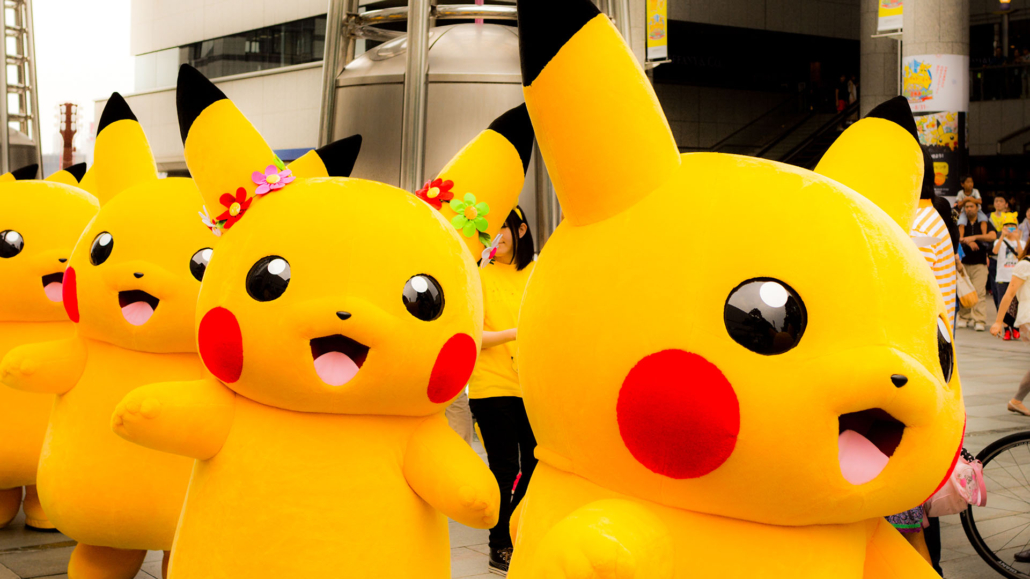
Gotta Catch ‘Em All
When I was a kid, I traded my way into a blue holographic Charizard. I have no memory of what I gave up for it, but I remember exactly how it felt to hold it. Here is the part that still makes me laugh. To this day, I do not really understand how to play the trading card game. I never did. The Charizard was never about the game. It was about having the Charizard.
That is the whole secret, right there. Collecting the cards was never really about playing the cards.
My first video game was Pokémon Blue. I had a Bulbasaur that I babied up to 100 HP, and somewhere along the way I slotted in a cheat-code cartridge to summon the famous glitch Pokémon, MissingNo. It corrupted my save data in ways I did not understand and did not care about. I was hooked anyway. Three decades later, I am clearly not alone.
Pokémon, officially Pocket Monsters, launched in Japan in 1996 as a pair of Game Boy games. The trading card game followed. Then an anime series, films, merchandise, mobile games, competitive tournaments, and dedicated retail stores. Today the franchise has grossed an estimated $150 billion across all revenue streams, making it the highest-grossing media property in history. It sits ahead of Hello Kitty, Mickey Mouse, and Star Wars. Estimates that fold in toys, books, and licensing push the lifetime figure even higher.
There is no single way to be a Pokémon fan. Some players build competitive teams. Others, like me, collected cards we could barely play with. Others hunt shiny Pokémon, watch the anime, or simply love the characters. That diversity is the engine. Pokémon runs an ecosystem of games, cards, animation, merchandise, and real-world experiences that feed one another.
The famous slogan, “Gotta Catch ‘Em All,” is more than a tagline.
It is a behavioral loop that has held across generations. With over 1,000 species now in the National Pokédex, completion always feels possible, yet never quite finished. That gap is the entire business model. My Charizard was proof of concept long before I had the words for it.
Collecting alone does not explain the achievement. Plenty of franchises have loyal fanbases, memorable characters, and popular products. Only a handful hold cultural relevance across multiple generations and continents. While countless competitors faded into nostalgia, Pokémon keeps recruiting new fans, generating billions, and occupying a singular place in global culture.
So the real question is not why Pokémon became popular. It is why a franchise built around capturing fictional monsters keeps thriving in an era where the average attention span now rivals that of a fruit fly.
The Universal Desire to Collect, Explore, and Belong
To non-fans, Pokémon is a game about catching colorful creatures, battling gym leaders, and collecting cards. To anyone who has burned three hours hunting a rare Pokémon that refused to appear, it is something far more powerful.
The urge to collect is the obvious driver. Whether it is baseball cards, vinyl records, or limited-edition sneakers, humans are natural collectors. We chase the completed set and the elusive pull of “just one more.” Pokémon turned that instinct into a deceptively simple objective: catch them all.
The franchise rewards progress relentlessly. A novice trainer accumulates gym badges, beats tougher opponents, and gradually transforms both their team and their own skill. Every milestone feels earned, and every win exposes another challenge just out of reach. It is a carefully engineered cycle of accomplishment, curiosity, and anticipation. The proof is in the cards. The trading card game has produced more than 75 billion cards printed worldwide, and demand has gotten so intense that major retailers have pulled product from shelves to manage the crowds. My un-played Charizard, it turns out, had a lot of company.
Pokémon also taps the desire to discover. Some species appear only in specific locations, under certain conditions, or during limited-time events. Others can only be obtained by trading. That builds genuine mystery. Players swap tips online, trade discoveries with friends, and occasionally travel surprising distances for a single rare encounter. Pokémon GO proved the point at scale. Its Chicago, Dortmund, and Montreal events generated an estimated $249 million in local tourism revenue, and a single 2019 festival drew 60,000 people who collectively walked 290,000 kilometers. It turns out adults will go on a quest just as readily as children, provided the reward is sufficiently cute.
Over time, Pokémon stop feeling like game assets and start feeling like companions.
Ask a fan about their favorite and the answer is rarely about stats. It is tied to a memory: a first adventure, a hard-won battle, a childhood afternoon with friends. In a franchise built on fictional creatures, the strongest connections are very real.
Seen this way, the popularity makes sense. Pokémon is not just a game about monsters in your pocket. It is built on four motivations that shaped human behavior long before the first Poké Ball was ever thrown: collecting, progressing, exploring, and belonging.
The Pokémon Ecosystem
Business loves the next big thing. Companies race to reinvent themselves and chase every passing trend. Pokémon has spent the years since its 1996 debut doing something far less glamorous: being Pokémon.
That sounds simple. It is surprisingly rare.
Rather than chasing change for its own sake, Pokémon has mastered evolving without losing its identity. New generations bring fresh Pokémon, updated battle mechanics, open-world exploration, and sharper graphics, but the core stays familiar. A player who picked up Pokémon Red in 1996 would know exactly what to do in a 2025 release like Pokémon Legends: Z-A. The objective has not moved: catch Pokémon, train and evolve them, battle, repeat. Humans never tire of it. The video game series alone has sold more than 480 million units, second only to Mario.
The triumph extends far past the games.
Most franchises have products. Pokémon has an ecosystem.
The games introduce new Pokémon. The anime turns them into personalities. The trading card game makes them collectibles. And Pokémon GO is the clearest proof that the loop outlasts the hype. At its 2016 launch it became a genuine cultural event, peaking at 232 million monthly players and hitting $1 billion in revenue within seven months. The conventional wisdom was that it would burn bright and vanish. It did not. Nearly a decade later the game still pulls tens of millions of monthly players, has crossed 700 million lifetime downloads, and has generated more than $6 billion in lifetime revenue. In 2024 alone it earned roughly $545 million, and its live events that year drew over 1.2 million in-person participants. That is not a fad. That is a habit. Pokémon Centers, meanwhile, convince otherwise rational adults to spend alarming sums on plushies. Each piece feeds the others, building something far greater than the sum of its parts.
That structure lets fans enter through almost any doorway and still land in the same universe.
From a business perspective, this is the most valuable lesson. While many Western brands pursue “being cool” as a growth strategy, Pokémon has pursued continuity. For nearly three decades it has asked one question: how do we stay recognizable while continuing to excite our audience?
Judging by the results, the answer to that question may be the rarest Pokémon of all.
From Tokyo to the World
Here is a fact that should be more surprising than it is. The biggest entertainment franchise on the planet was built by a small team in Japan, in a language most of its eventual fans did not speak, around creatures named after Japanese puns. Pokémon did not arrive pre-engineered for global domination. It was a Japanese product that the world decided to adopt.
The crossover was not guaranteed, and it was not accidental either. When Pokémon came to the United States, the games were handled by Nintendo, but the cultural beachhead was the anime, and the anime came through a New York licensing company called 4Kids Entertainment. The English dub premiered in syndication in September 1998, just weeks before the games hit US shelves. It was a calculated bet: a licensing agent wagering that American kids would fall for a Japanese cartoon about monster collecting. They did, completely.
That bet did more than sell Pokémon. It helped crack open the entire US market for Japanese animation. Pokémon proved anime could be mainstream children’s programming in America, not a niche import, and 4Kids rode that momentum into Yu-Gi-Oh!, One Piece, and a wave of titles that defined a generation of after-school television.
For a lot of Western fans, Pokémon was the gateway drug to anime itself.
The genius of the localization was knowing what to keep and what to change. Character and place names were swapped for English-speaking markets, with one deliberate exception: Pikachu stayed Pikachu, everywhere, in every language. The mascot was non-negotiable. That instinct, localizing the edges and protecting the core, is the same discipline that has guided the franchise for thirty years.
American companies kept finding ways into the universe. The most spectacular was Niantic, a San Francisco studio spun out of Google, which partnered with The Pokémon Company and Nintendo to build Pokémon GO in 2016. A Japanese franchise, a Silicon Valley developer, and augmented reality combined into one of the fastest-growing mobile phenomena in history. The collaboration was so valuable that in 2025 the gaming company Scopely acquired Niantic’s games division, with Pokémon GO at the center of the deal, for a reported $3.5 billion. The Japanese brand had become a global asset that the world’s largest players wanted a stake in.
The Cathedral of Plush
If you want to see the franchise’s pull made physical, walk into a Pokémon Center. The first one opened in Tokyo in 1998, the same year the anime reached America. They are not really stores in any ordinary sense. They are immersive retail spaces, closer to small theme parks, where the flagship Mega Tokyo in Ikebukuro stocks more than 2,500 different products and a plush wall that arranges every creature by Pokédex number. Calling it a shop undersells it the way calling Disneyland a park does.
There are now around 25 official Pokémon Centers, the overwhelming majority in Japan, with a handful abroad in places like New York, Singapore, and Taipei. They have become genuine tourist destinations. For the surge of visitors coming to Japan, a Pokémon Center is a fixed stop on the itinerary, a place to buy Japan-exclusive merchandise that cannot be had anywhere else. Tax-free counters, passport in hand, ring up plushies that started life as line items on a Game Boy cartridge. The scarcity is the point: location-exclusive goods rotate every few months, so the visit itself becomes collectible. Gotta catch ’em all, now with a boarding pass.
This is the often-overlooked engine of the franchise.
Merchandise and licensing, not games, account for the lion’s share of that $150 billion lifetime total. The games are the seed. The plush wall is the harvest. And the people lining up at the register are frequently the same ones who, decades earlier, traded their way into a holographic Charizard they never learned to play.
The Loyal Community
Another reason Pokémon has stayed relevant for nearly three decades is that its success does not rest solely on The Pokémon Company. Much of the strength comes from the community built around it.
Long before social platforms turned “engagement” into a business metric, Pokémon was getting people to connect. The original games were designed around interaction. Certain Pokémon could only be obtained by trading, which forced players to find friends, classmates, and fellow fans. Completing the Pokédex was never a solo task. It was a shared one.
That sense of community spilled far beyond the games. School playgrounds became trading-card marketplaces. Lunch breaks became battle arenas. Today those same interactions play out across social media and at international championships that draw thousands of competitors and fill arenas. The 2024 World Championships in Honolulu pulled record crowds and a global streaming audience.
The more people engage, the more valuable the community becomes.
New players aren’t just buying a game, but are joining a community that spans generations. Unlike entertainment that is consumed and forgotten, Pokémon thrives because it gives people something to experience together.
Here is the lesson for brands. Products attract customers. Communities create loyalty. A competitor can copy features, undercut on price, or ship a similar product. Replicating decades of emotional investment and real connection is far harder.
More Than Monsters in Your Pocket
Pokémon was never really selling monsters. It was selling adventure, discovery, community, and the sense that there was always one more thing waiting to be found.
That promise has stayed remarkably consistent even as the world around it changed. New technologies have arrived. Consumer habits shifted. Entire entertainment platforms rose and collapsed. Pokémon kept finding new audiences while holding onto the loyalty of existing ones.
The most valuable lesson is this.
The strongest brands are not always the fastest-moving or the most disruptive.
Often they are the ones that understand their core values so well they can evolve without losing sight of who they are.
Across generations, Pokémon stays relevant because it never stopped giving people a reason to explore what comes next.
And perhaps that is why, nearly thirty years on, millions of people are still trying to catch ’em all. I still have the Charizard. I still cannot play the card game. I have never minded.
For foreign companies entering Japan, getting communications right from the outset can significantly impact how quickly you gain traction in the market.
If you are evaluating your PR approach in Japan, working with a PR firm that understands both global strategy and local expectations can make a meaningful difference.
Responsible for PR in Japan and want results? Let’s talk!
Parthenon Japan’s team of bilingual communications strategists helps global teams translate strategy into measurable performance.
About the Author

Parker J. Allen is President & CEO at Parthenon Japan.
As a communications and strategy leader, he has served brands including Agoda, Air Canada, Olympus, Red Bull, Swiss Re, and Stryker among other global brands.

